
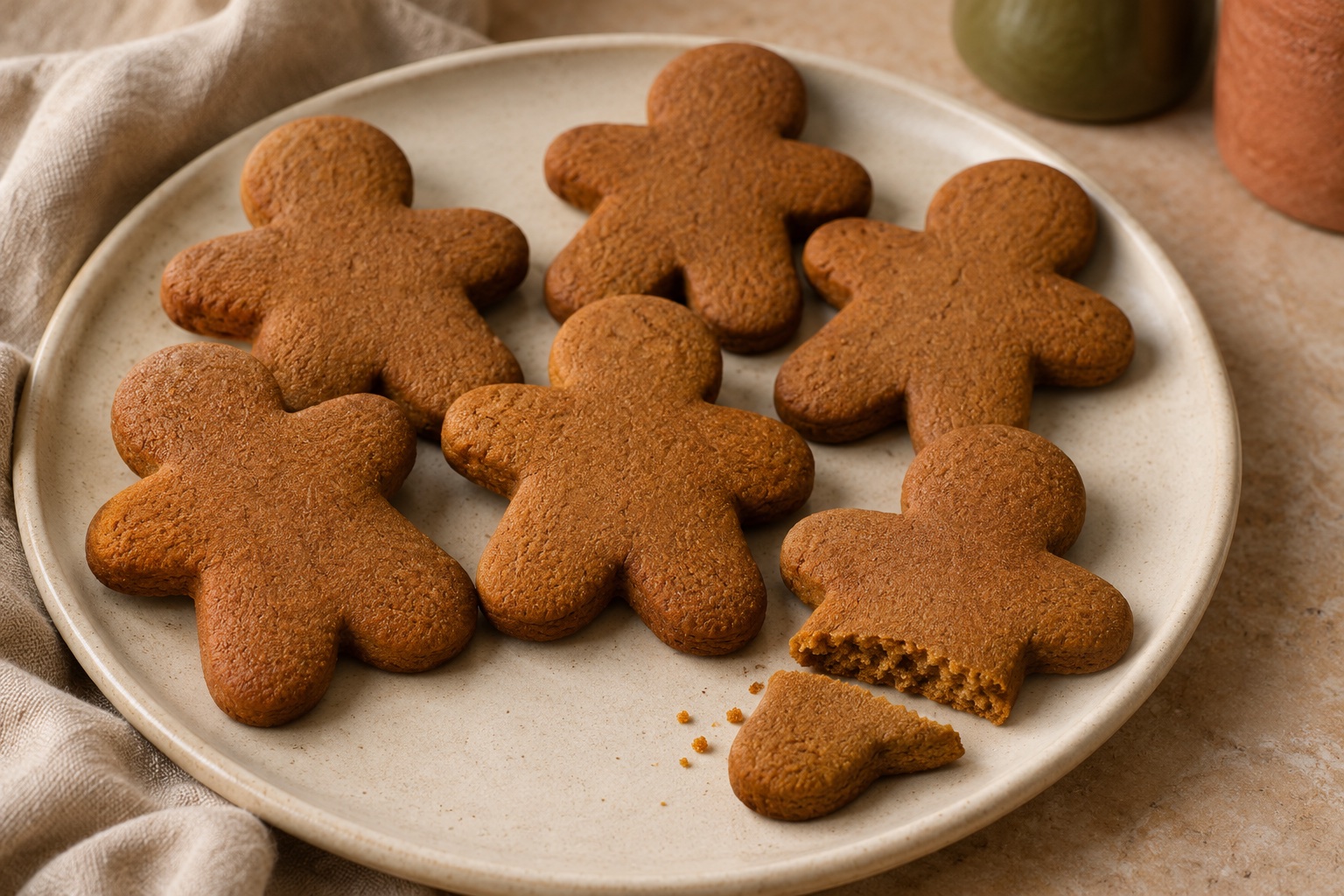
Gingerbread Cookies with Warm Molasses Spice
These gingerbread cookies bring a generous dose of ginger and cinnamon, deep molasses flavor and shapes ready for a Christmas cookie plate. Keep them plain to enjoy the spice, or save decorating for another day. Plan ahead: the dough needs at least 3 hours in the refrigerator before rolling.
Ingredient notes
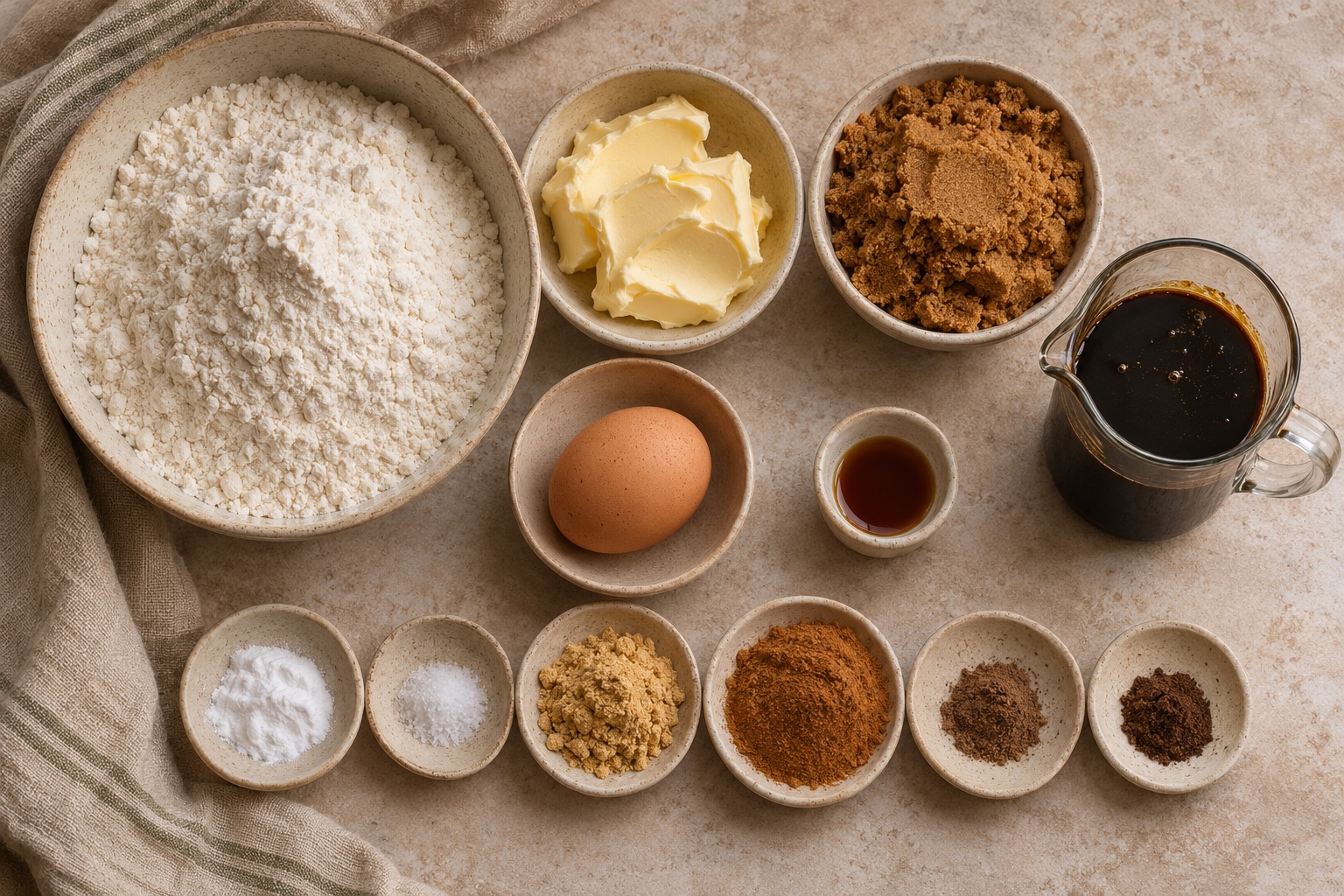
Use unsulphured or dark molasses, avoiding blackstrap for this version. Light or dark brown sugar both fit. Keep the ginger, cinnamon, allspice and cloves separate until measured; these are ground spices, not fresh ginger. Weigh the flour if you can. If using cups, spoon flour into the cup and level it instead of packing it down.
The butter should be softened, not melted. Measure the dough ingredients before adding extra flour for rolling: a sticky mixture needs chilling first. Honey and maple syrup change the flavor and are not direct replacements here, so keep the molasses for this batch.
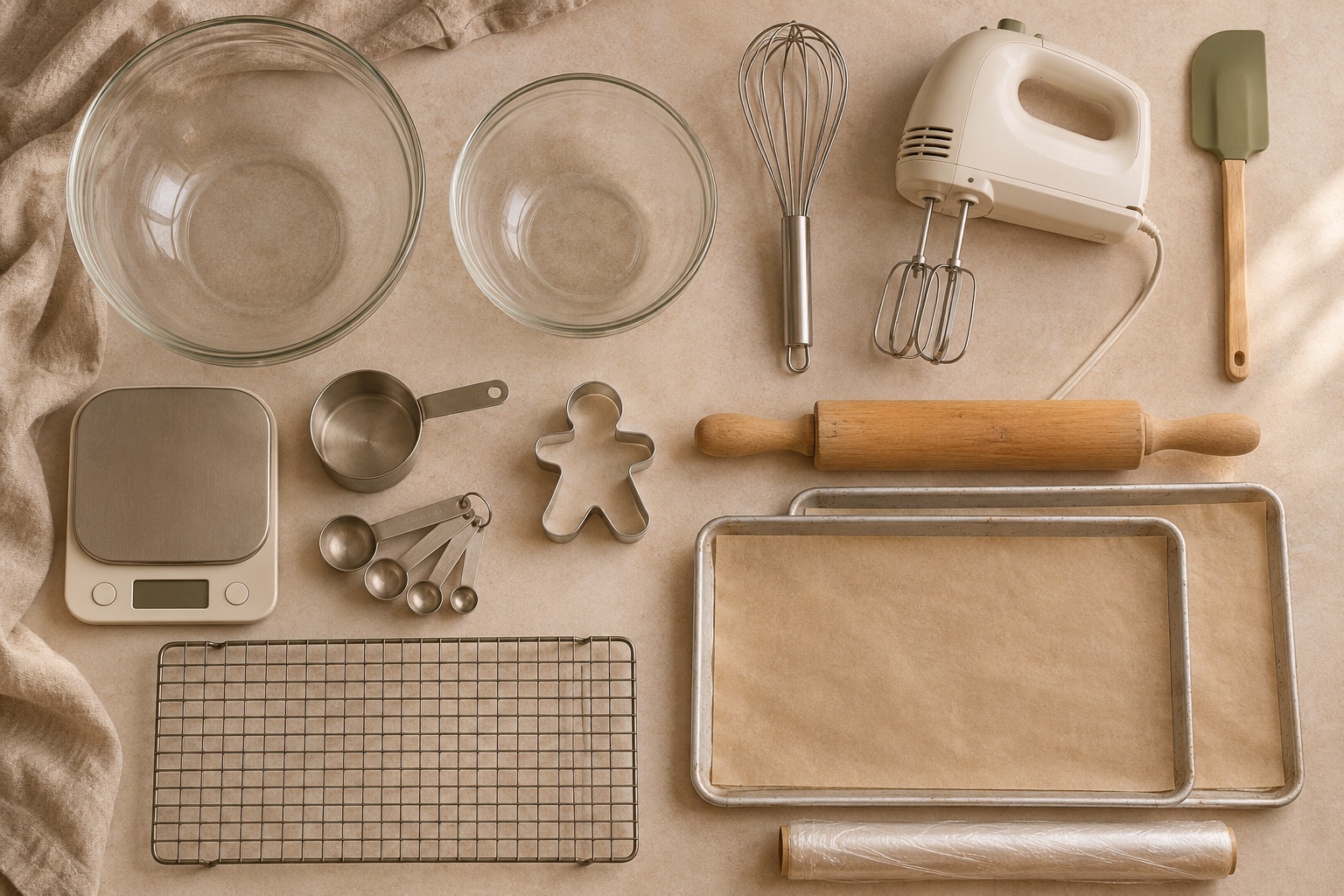
Equipment
Gather two mixing bowls, a whisk, an electric mixer, a spatula, measuring tools or a scale, food wrap, a rolling pin and a 4-inch cookie cutter. You will also need parchment-lined baking sheets and a wire cooling rack. Use one cutter size per tray so the cookies finish together.
How to make gingerbread cookies
1. Mix the dry ingredients
Whisk the flour, baking soda, salt, ginger, cinnamon, allspice and cloves in a bowl until evenly mixed.
2. Beat the butter mixture
In a second bowl, beat the butter with an electric mixer at medium speed for 1 minute, until smooth. Mix in the brown sugar and molasses at medium-high speed until creamy, scraping the bowl. Add the egg and vanilla; beat on high for 2 minutes. A slightly separated appearance is fine.
3. Bring the dough together and chill
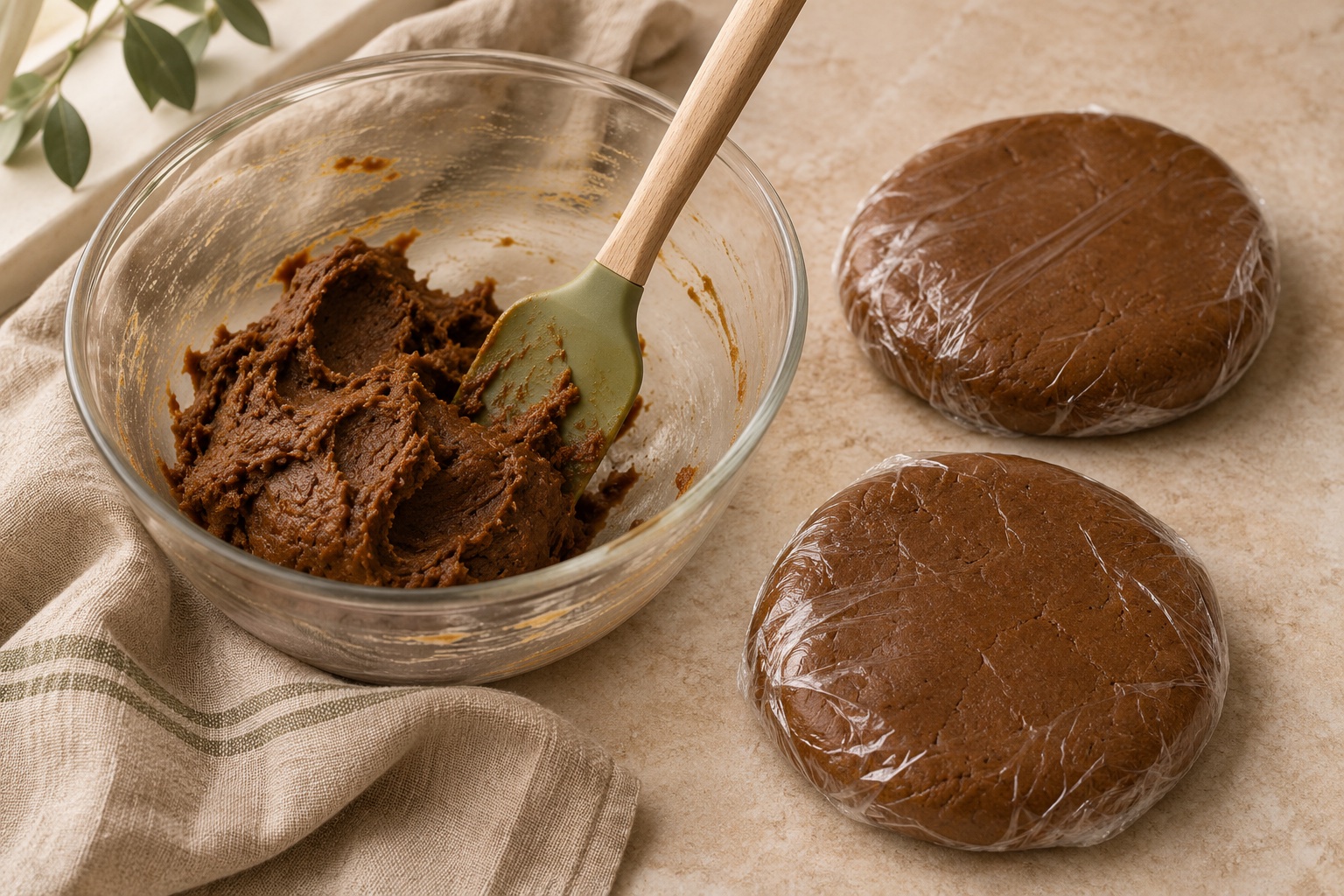
Mix the dry ingredients into the butter mixture on low speed just until a thick, sticky dough forms. Divide into two portions, wrap each tightly and flatten into a disc. Refrigerate for at least 3 hours, or up to 3 days, at 40°F (4°C) or below.
Flattening the portions before chilling makes them easier to roll later. Keep the second disc cold while you shape the first. Do not taste the dough: both raw flour and raw egg can carry harmful germs. Wash your hands, tools and worktop after handling them.
4. Roll and cut
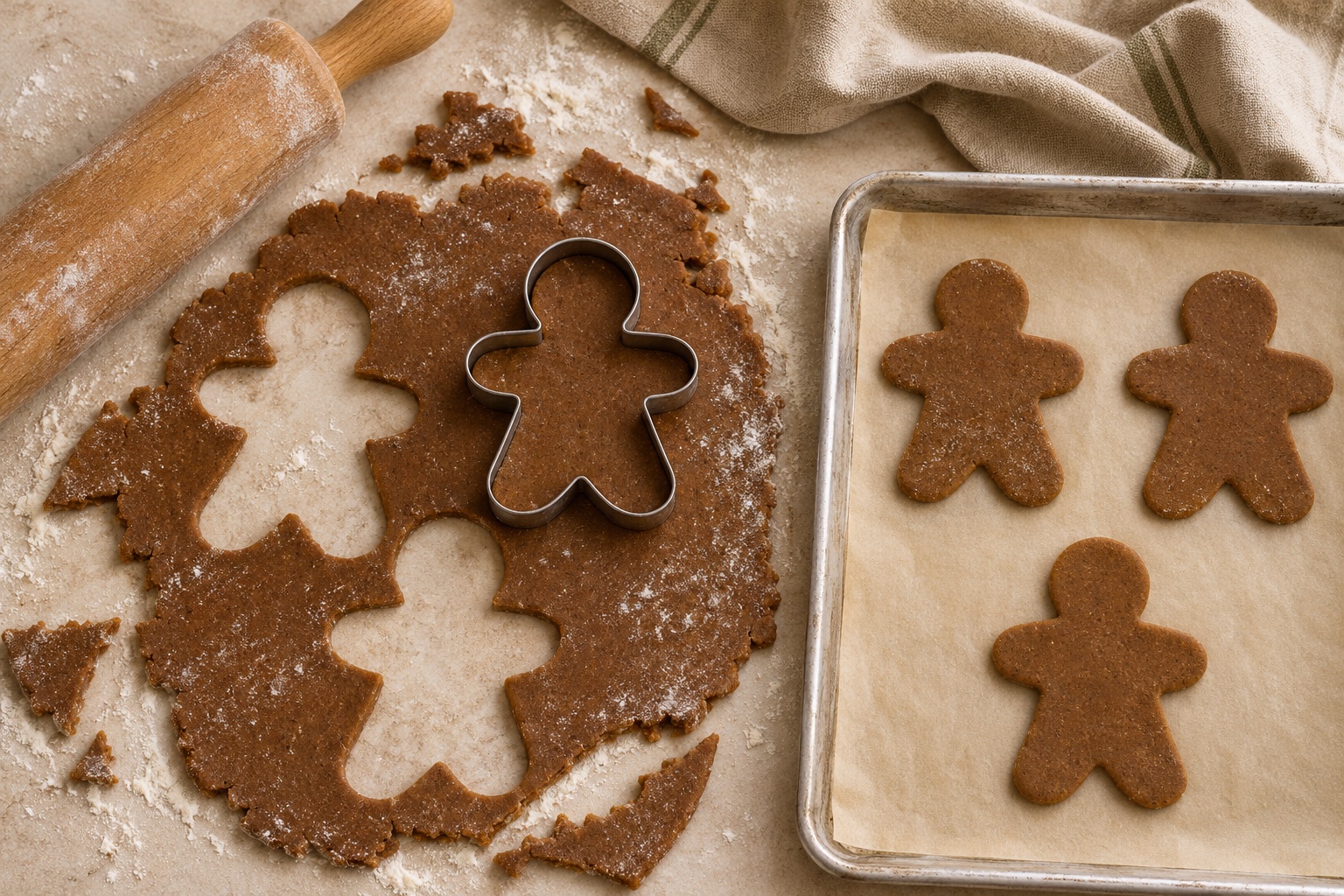
Heat the oven to 350°F (177°C). Line large baking sheets with parchment. Roll one chilled disc on a floured surface to 1/4 inch thick, flouring the rolling pin as needed. Rotate the dough and press cracked edges together. Cut with a 4-inch cutter and arrange 1 inch apart. Reroll scraps and repeat with the second disc. Keep cutouts refrigerated while working on the rest.
If the edges crack, press them back together and rotate the dough as you roll. Dust sticky contact points with flour rather than working handfuls into the whole batch. If cutouts soften and distort when lifted, return them to the refrigerator until manageable.
5. Bake, then cool
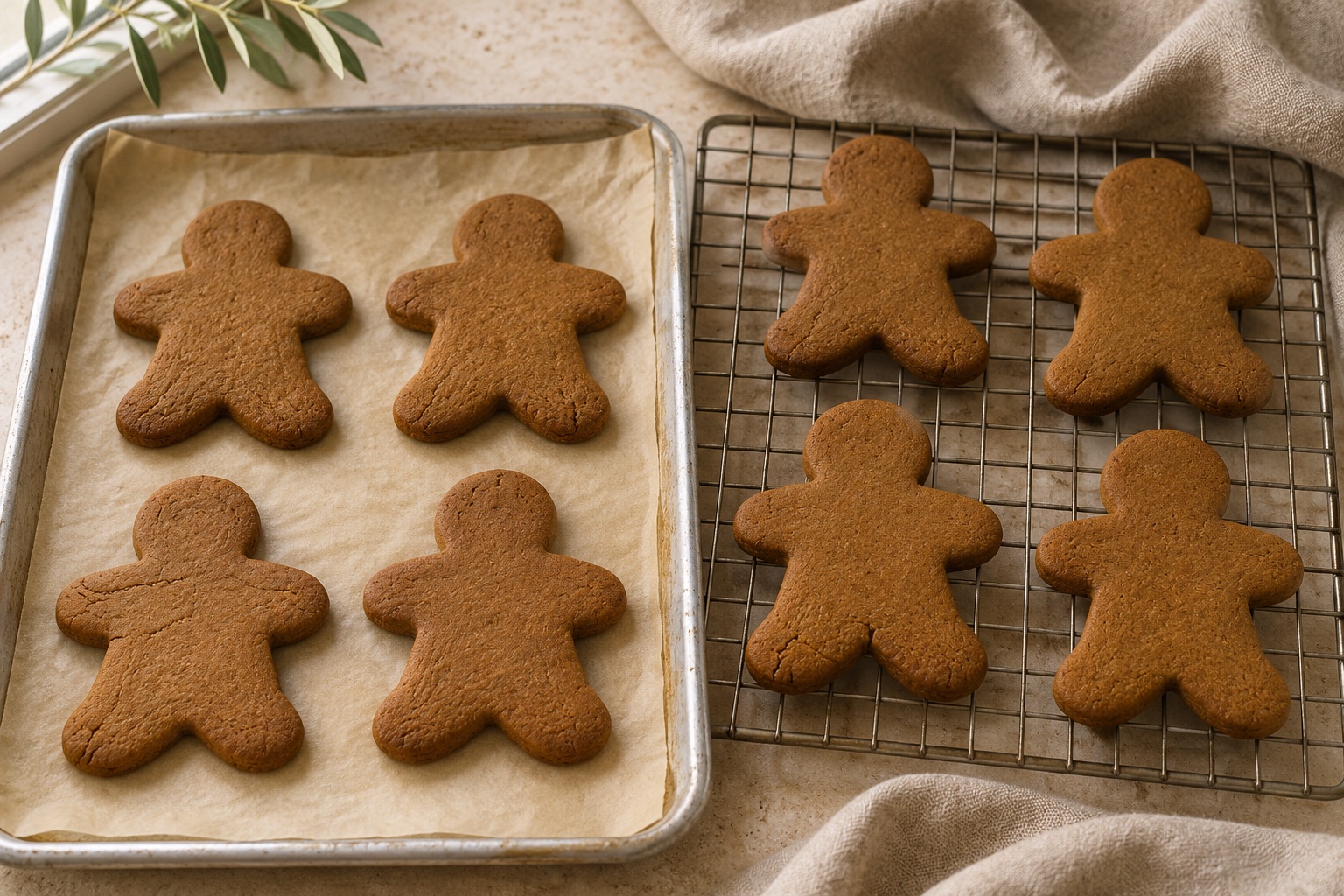
Bake 4-inch cookies for 9–11 minutes, rotating the tray once, until the edges are set and just beginning to deepen in color. Smaller cutouts take about 8 minutes; larger ones about 11 minutes. Longer baking makes a crunchier cookie.
Leave the cookies on their baking sheet for 5 minutes, then move them to a wire rack and let them cool completely. Serve plain.
Dark dough can hide browning, so watch the edges and the timer together. Do not wait for the whole cookie to become hard in the oven. Give the baked shapes their full 5-minute tray rest before moving them, especially around narrow arms and legs.
Make ahead and storage
Keep wrapped dough refrigerated at 40°F (4°C) or below for up to 3 days. For a longer pause, freeze the wrapped discs for up to 2 months for quality, then thaw overnight in the refrigerator before rolling. Let baked cookies cool completely before sealing them in an airtight container. They keep for up to 1 week at room temperature, or freeze for up to 3 months for quality. Separate layers with parchment to protect the shapes.
Questions before you bake
Can you shorten the chill? Keep the full 3 hours. This dough needs that rest for shaping; a brief chill can leave cutouts spreading on the tray.
Can you use a cookie stamp? Choose simple cutouts if you want a clear shape. Fine stamped details may soften during baking.
Will this dough work for a gingerbread house? Use a recipe intended for building instead. These cookies are for eating and are not sturdy construction pieces.

Ingredients
Method
- Whisk the flour, baking soda, salt, ginger, cinnamon, allspice and cloves in a bowl until evenly mixed.
- In a second bowl, beat the butter with an electric mixer at medium speed for 1 minute, until smooth. Mix in the brown sugar and molasses at medium-high speed until creamy, scraping the bowl. Add the egg and vanilla; beat on high for 2 minutes. A slightly separated appearance is fine.
- Mix the dry ingredients into the butter mixture on low speed just until a thick, sticky dough forms. Divide into two portions, wrap each tightly and flatten into a disc. Refrigerate for at least 3 hours, or up to 3 days, at 40°F (4°C) or below.
- Heat the oven to 350°F (177°C). Line large baking sheets with parchment. Roll one chilled disc on a floured surface to 1/4 inch thick, flouring the rolling pin as needed. Rotate the dough and press cracked edges together. Cut with a 4-inch cutter and arrange 1 inch apart. Reroll scraps and repeat with the second disc. Keep cutouts refrigerated while working on the rest.
- Bake 4-inch cookies for 9–11 minutes, rotating the tray once, until the edges are set and just beginning to deepen in color. Smaller cutouts take about 8 minutes; larger ones about 11 minutes. Longer baking makes a crunchier cookie.
- Leave the cookies on their baking sheet for 5 minutes, then move them to a wire rack and let them cool completely. Serve plain.
Notes
More for your holiday table
Planning a full holiday meal? Add sweet potato casserole with pecan crumble to the savory part of the menu, then bring out the cookies afterward.